Trauma Bond vs True Love – Real Difference Explained
Have you ever felt deeply attached to someone who constantly hurts you… yet you still cannot leave them? You miss them even after toxic fights. You feel anxious when they ignore you. And when they suddenly become loving again, it feels like relief, happiness, and “love.” But sometimes, what feels like love is actually a trauma bond. Many people stay in emotionally painful relationships because they confuse emotional addiction with genuine connection. Understanding the difference can protect your mental health, self-worth, and future happiness. In this article, we’ll break down the real difference between trauma bonding and true love in simple, practical language.
PERSONAL RELATION
5/6/20264 min read

Trauma Bond vs True Love – Real Difference Explained
Have you ever felt deeply attached to someone who constantly hurts you… yet you still cannot leave them?
-:Watch video:- Signs You Are In A Trauma Bond Not Real Love
You miss them even after toxic fights.
You feel anxious when they ignore you.
And when they suddenly become loving again, it feels like relief, happiness, and “love.”
But sometimes, what feels like love is actually a trauma bond.
Many people stay in emotionally painful relationships because they confuse emotional addiction with genuine connection. Understanding the difference can protect your mental health, self-worth, and future happiness.
In this article, we’ll break down the real difference between trauma bonding and true love in simple, practical language.
What Is a Trauma Bond?
A trauma bond is a strong emotional attachment formed through repeated cycles of:
Pain
Emotional manipulation
Neglect
Conflict
Temporary affection
The relationship becomes addictive because the brain starts craving emotional relief after emotional pain.
One day the person hurts you.
The next day they apologize, show affection, or act caring again.
This creates an emotional rollercoaster that keeps you attached.
Over time, your mind starts confusing:
relief with love,
attachment with loyalty,
and anxiety with passion.
What Is True Love?
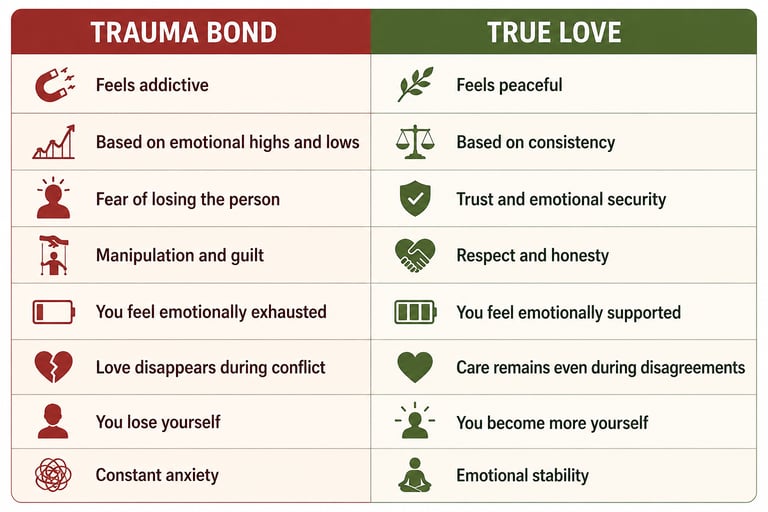
True love is not based on fear, confusion, or emotional instability.
Real love feels:
safe,
peaceful,
respectful,
emotionally consistent,
and supportive.
In healthy love, you do not constantly fear abandonment, manipulation, or emotional punishment.
True love helps you grow instead of emotionally draining you.
Trauma Bond vs True Love: The Real Difference
Signs You Are in a Trauma Bond
1. You Keep Forgiving Hurtful Behavior
Even after repeated lies, disrespect, or emotional pain, you continue giving chances.
You may say:
“They will change.”
“They didn’t mean it.”
“Deep down they love me.”
But the harmful pattern keeps repeating.
2. The Relationship Feels Like an Emotional Rollercoaster
One moment you feel loved.
The next moment you feel ignored, rejected, or emotionally shattered.
The extreme highs and lows create emotional dependency.
3. You Feel Anxious Without Them
Instead of peace, the relationship creates fear:
fear of losing them,
fear of being ignored,
fear of upsetting them.
This anxiety is often mistaken for deep love.
4. You Constantly Blame Yourself
In trauma bonds, manipulation often makes one person feel responsible for everything.
You start thinking:
“Maybe I’m too sensitive.”
“Maybe I caused the problem.”
“Maybe I need to try harder.”
5. You Feel Emotionally Drained
Healthy love should not leave you emotionally exhausted every day.
If you constantly feel:
mentally tired,
emotionally confused,
insecure,
or emotionally dependent,
the relationship may be unhealthy.
Signs of True Love
1. You Feel Safe Being Yourself
You don’t need to pretend, beg for attention, or constantly prove your worth.
You feel accepted.
2. Communication Feels Respectful
Disagreements happen in every relationship.
But in true love:
people listen,
communicate calmly,
and solve problems without emotional destruction.
3. Your Mental Health Improves
Healthy relationships support emotional well-being.
You feel:
calmer,
happier,
more motivated,
and emotionally balanced.
4. There Is Consistency
True love does not disappear randomly.
The person’s care, effort, and respect remain stable over time.
5. You Continue Growing as a Person
Real love encourages:
self-respect,
goals,
healing,
confidence,
and personal growth.
You don’t lose your identity.
Why Trauma Bonds Feel So Powerful
Trauma bonds affect the brain deeply.
When emotional pain is followed by affection, the brain releases chemicals linked to relief and reward.
This creates emotional addiction similar to gambling or other addictive cycles.
The unpredictability keeps the person emotionally attached.
That’s why leaving a toxic relationship can feel extremely difficult — even when you know it is hurting you.
Practical Tips to Break a Trauma Bond
1. Stop Romanticizing the Pain
Love should not constantly destroy your peace.
Ask yourself:
Am I truly loved?
Or am I emotionally attached to temporary affection?
2. Observe Patterns, Not Promises
Toxic relationships often survive on future promises.
Instead of listening to words, observe:
repeated behavior,
consistency,
and emotional effort.
Patterns reveal the truth.
3. Reconnect With Your Identity
Trauma bonds often make people lose themselves.
Start rebuilding:
hobbies,
friendships,
routines,
confidence,
and self-care.
Your life should not emotionally depend on one person.
4. Limit Emotional Dependency
Spend time:
alone,
with supportive people,
and doing meaningful activities.
Emotional independence weakens unhealthy attachment.
5. Set Boundaries
Healthy boundaries protect mental health.
Examples:
refusing disrespect,
limiting manipulation,
protecting your peace,
saying “no” without guilt.
6. Seek Support
Talking to:
trusted friends,
family,
counsellors,
or therapists
can help you see the relationship more clearly.
People inside trauma bonds often normalize unhealthy behavior without realizing it.
Can a Trauma Bond Become Healthy?
Sometimes relationships improve if:
both people genuinely acknowledge the problem,
take responsibility,
seek professional help,
and consistently change harmful behavior.
But real change requires long-term action — not temporary apologies.
If abuse, manipulation, or emotional damage continues repeatedly, protecting your mental health becomes more important than saving the relationship.
Final Thoughts
True love should not constantly make you feel anxious, broken, confused, or emotionally exhausted.
Love is not supposed to feel like emotional survival.
A trauma bond keeps you trapped in cycles of pain and temporary relief.
True love brings emotional safety, respect, growth, and peace.
The biggest sign of healthy love is not intensity.
It is consistency.
Sometimes the hardest part is realizing that what felt powerful was actually emotional dependency — not love.
And sometimes healing begins the moment you stop chasing pain disguised as affection.
Frequently Asked Questions (FAQs)
Is trauma bonding the same as love?
No. Trauma bonding is emotional attachment formed through cycles of pain and reward, while true love is based on respect, safety, consistency, and emotional support.
Why is it so hard to leave a trauma bond?
Trauma bonds create emotional dependency. The brain becomes attached to moments of relief and affection after emotional pain, making the relationship feel addictive.
Can trauma bonds happen without physical abuse?
Yes. Emotional manipulation, neglect, gaslighting, and inconsistent affection can also create trauma bonds.
How do I know if my relationship is unhealthy?
If your relationship constantly causes:
anxiety,
emotional exhaustion,
fear,
confusion,
low self-worth,
or emotional instability,
it may be unhealthy.
Can therapy help break a trauma bond?
Yes. Therapy or counseling can help identify unhealthy patterns, rebuild self-worth, and support emotional healing.
What does healthy love feel like?
Healthy love feels:
calm,
emotionally safe,
respectful,
supportive,
and consistent.
You feel valued without constantly fearing abandonment or emotional punishment.
Read more : How to Stay Positive in Tough Times (Proven Strategies That Actually Work)