Unlocking Mental Toughness in Quiet People
Explore the hidden strengths of quiet people. Discover 10 powerful traits that showcase mental toughness, including self-awareness, emotional control, and calm confidence. Perfect for those interested in psychology and self-growth.
SELF HELPMENTAL HEALTHPERSONAL RELATION
Arzoo
5/8/20264 min read

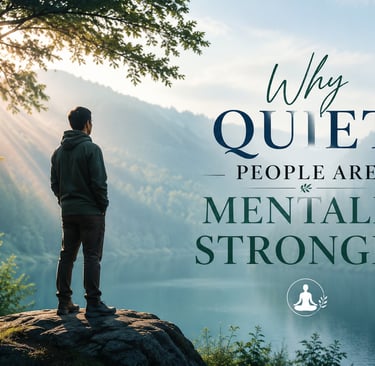
In a world that celebrates loud opinions and bold personalities, quiet people often go unnoticed. Yet, beneath their calm surface lies an incredible reservoir of mental strength, resilience, and self-awareness that many overlook. While society often equates loudness with confidence, research and psychology reveal that quiet individuals are often the most mentally strong people in the room.
1. Quiet People Thrive on Self-Reflection
Quiet people spend more time in introspection. Instead of reacting impulsively, they analyze situations, understand their emotions, and make balanced decisions.
This consistent self-reflection builds emotional intelligence, one of the strongest indicators of mental resilience.
They process emotions rather than suppress them.
They understand their triggers and manage stress effectively.
They approach challenges with calm objectivity.
2. They’re Comfortable with Silence
Silence intimidates most people. But for those who are quiet, silence is not awkward, it’s empowering. They use it to recharge, observe, and think critically.
Comfort with silence is a hallmark of self-control and emotional stability, two pillars of mental strength.
As the saying goes, “A strong mind speaks when it has something valuable to say.”
Quiet people understand that energy is precious, and they invest it wisely.
3. They Don’t Seek Validation from Others
One of the biggest strengths of quiet people is independence from external approval. They’re not constantly chasing attention or likes; their sense of worth comes from within.
This internal validation creates mental grounding, protecting them from the turbulence of comparisons and social pressure.
They value authenticity over popularity.
They focus on growth instead of competition.
Their confidence is quiet, not performative.
4. Quiet People Listen More Than They Speak
Listening is a superpower in communication. Quiet individuals often become exceptional listeners, allowing them to gain deeper insights into people and problems.
By understanding before responding, they show empathy, patience, and wisdom, key signs of emotional maturity.
This ability makes them strong leaders and reliable friends. They don’t just hear words; they feel the meaning behind them.
5. They Stay Calm Under Pressure
In stressful situations, quiet people maintain their composure. Their natural inclination to think before acting helps them avoid hasty decisions and manage anxiety better.
They observe before reacting.
They avoid unnecessary conflict.
They recover faster from setbacks.
This calmness under pressure makes them mentally resilient, especially in workplaces and relationships where emotions often run high.
6. They Channel Energy Toward Purpose, Not Drama
While others may waste energy on gossip, competition, or external noise, quiet people are laser-focused on what matters. Their selective attention helps them protect their mental energy and invest it in meaningful goals.
This focus builds discipline, a cornerstone of mental toughness. By staying true to their priorities, they cultivate long-term success without burning out.
7. Their Inner World Fuels Creativity
Many quiet individuals, writers, artists, thinkers, find strength in their rich inner world. Solitude enhances creativity because it allows deep thinking without external distraction.
Their ability to sit alone with their thoughts fosters innovation, clarity, and unique perspectives that come from within rather than from the crowd.
8. Quiet Does Not Mean Weak, It Means Strategic
The misconception that quiet equals shy or weak couldn’t be further from the truth. Quiet people are often strategic thinkers who prefer to act deliberately rather than impulsively.
Their silence is not emptiness, it’s awareness. They observe, understand, and move when the time is right.
9. The Science Behind Mental Strength in Quiet People
Psychological studies show that introverts and quiet personalities often have more active areas in the prefrontal cortex, the part of the brain responsible for planning, decision-making, and managing emotions.
This neurological trait supports behaviors like mindfulness, empathy, and resilience, all synonymous with mental strength.
Moreover, quiet people’s ability to spend time alone with their thoughts often leads to lower stress levels and higher self-awareness, both key features of a strong mind.
10. How to Develop Mental Strength Like Quiet People
Even if you’re naturally outgoing, you can cultivate the traits that make quiet people strong:
Practice mindfulness. Spend time each day in stillness.
Listen actively. Seek to understand, not just reply.
Embrace solitude. Use alone time to recharge, not to feel lonely.
Set emotional boundaries. Protect your peace and mental space.
Respond, don’t react. Control your thoughts, and you’ll control your outcomes.
Final Thoughts: Strength Lies in Stillness
Quiet people remind us that mental strength doesn’t need to be loud. In their calmness lies confidence. In their silence, wisdom. And in their solitude, power.
Next time you meet a quiet person, pay attention—not to the words they don’t say, but to the depth they carry. Because often, the strongest minds speak the softest.
Frequently Asked Questions
1. Are quiet people mentally stronger than others?
Quiet people often show strong self-control, deep thinking, and emotional awareness, which contribute to higher mental resilience compared to those who are more outwardly expressive.2. Why do quiet people appear so calm under pressure?
They tend to process situations internally and avoid reacting impulsively. Their ability to pause, observe, and analyze helps them stay composed in stressful situations.3. Is being quiet the same as being shy or introverted?
Not necessarily. Quiet people choose silence intentionally, while shyness stems from social anxiety. Many quiet individuals are confident and selective in how they communicate.4. How does silence build mental strength?
Silence allows space for reflection, emotional regulation, and problem-solving. It strengthens focus and clarity, reducing stress and mental noise.5. What are some habits that help quiet people stay strong mentally?
They often practice mindfulness, set clear boundaries, limit distractions, listen actively, and spend time in meaningful solitude.6. Can extroverts develop the same mental strength as quiet people?
Absolutely. Anyone can cultivate mental toughness by learning from quiet habits—embracing silence, reflecting more deeply, and managing emotions thoughtfully.7. Do quiet people make better leaders?
Quiet leaders often excel because they listen well, think strategically, and make balanced decisions. Their calm presence can inspire trust and stability within teams.8. What role does emotional intelligence play in quiet people’s strength?
Emotional intelligence helps quiet individuals understand their feelings and those of others, leading to better communication, empathy, and resilience.9. How can I become mentally strong like a quiet person?
Start by spending more time in silence, journaling your thoughts, responding instead of reacting, and focusing on purpose over approval.10. Why is mental strength often misunderstood in quiet people?
Because society tends to equate loudness with confidence. Quiet people’s power lies in subtlety, reflection, and emotional steadiness—traits that aren’t always visible but are deeply impactful.Read more: Trauma Bond vs True Love – Real Difference Explained
How to Stay Positive in Tough Times (Proven Strategies That Actually Work)